

Dear Dr. Alexander Ryder,
I write to you in utmost urgency as I have stumbled upon an important lead in the manuscript history of the forbidden text. Before embarking on the perilous journey this has lured me into, I would like to inform you of my discoveries. Discoveries, which I now wish had been left in the darkness.
It is known that a certain Theodorus Philetas translated that god-forsaken tome from the language of the Mohammedans into Greek around the year 950 in Constantinople. Yet much of his life and identity remain a mystery and are whispered of only in fetid legends. As a Medieval scholar with a keen interest in the tenth-century, I have meticulously combed through tome after tome of unhinged scribblings from particularly the literary circle of emperor Constantine, seventh of his name also known as the Porphyrogennetos, and his near contemporaries, who all inhabited the city around the same time as that accursed Theodorus. What I uncovered is bound to raise your curiosity.
A certain Konstantios Rhodios, known in our day as Constantine of Rhodes, wrote a series of invective poems directed against a creature of utmost disgust, whom he referred to as simply “Θεόδωρον εὐνοῦχον Παφλαγόνα (‘the Paphlagonian eunuch Theodorus’). It is known that Konstantios was active in Constantinople during the 950’s from his other works describing the city. Scholars of Medieval Byzantium have been unable to definitively identify this leprous figure, with suggestions generally concentrating around either Theodorus the court eunuch, known from the eleventh century text of Theophanes Continuatus as a παρακοιμώμενος (i.e. the emperor’s right hand) during the tenth-century, or a figure known as Theodorus the Mystikos. A third option stands out, which appears to have eluded our modern generation of historians, that of Theodorus Philetas. Or, it is possible that one of the above figures was in fact the Theodorus Philetas spoken about in our manuscript tradition, that who is known to have translated that contagious tome to Greek, thus introducing it to civilizations of the Occident.
Some of the lines composed by Konstantios are thus. I surmise you are aware that this text can be most readily accessed from the 1850 edition of P. Matranga (p. 626, lines 32-41):
τρανῶς ἄκουε χοιροπαφλάγων νέε
καὶ βόσκε χοίρους, ὡς γένος χοίρων πέλων
καὶ τρῶγʹ ἄκυλον καὶ διαιτῶ κανθάρους.
καὶ γαστέρ’ ἐξόγκωσον εἰς ὅσον σθένεις,
καὶ μὴ λόγους μάτᾳζε χοιρώδεις γράφων,
ἀλλ’ ὡς συὸς γέννημα, γρυλλίζειν μάθε
καὶ σκὼρ μασᾶσθαι καὶ δυσώδη κοπρίαν
που τε μητρὶ πυκνὰ πυκνὰ γρυλλίζων·
ὅταν δὲ καιρὸς τῆς σφαγῆς χοίρων φθάσῃ,
τότε σφαγήσῃ καὐτός, ὡς χοίρων γένος.
Konstantios thus utilizes a barrage of words and insults of such severity and vehemence that one wonders what on earth his victim had done to deserve this. Theodorus is dehumanized and called of a ‘swine-race’ (χοίρων γένος, χοιροπαφλάγων) on several occasions. While he is told to eat excrement (σκὼρ μασᾶσθαι καὶ δυσώδη κοπρίαν) and kill himself (σφαγήσῃ καὐτός). Above all, though, Konstantios bids this Theodorus to stop writing incoherent demon-born words (μὴ λόγους μάτᾳζε χοιρώδεις γράφων) and instead go back to grunting (γρυλλίζειν) so as to commune with his like-minded cultists. Konstantios is therefore very fearful of the writings resonating from a figure called Theodorus active during the 950’s in Constantinople.
In a further poem against directed against Theodorus, Konstanios accuses him with ‘polluting the entire human race” (ῥύπασμα τοῦ βροτῶν γένους – ed. P. Matranga, 630:95). Thus Theodorus the Paphlagonian is the most likely culprit of the Stygian horrors unleashed on our world, as he thus enabled that accursed manuscript to survive and be perpetuated down Occidental traditions. This informations aligns eerily well with the words of another tenth-century Byzantine author, Arethas of Caesarea, who curses the Paphlagonians for turning ‘all things honorable into wickedness’ (εἰς μωρίαν τὸ εὐδόκιμον ἀποφέρονται). This is to be found in his Scholia in Lucianum (ed. Rabe, 223:7-8).
I have therefore concluded that Theodorus the Paphlagonian is responsible for conveying down to us the untold horrors which had laid dormant for millennia, but which the prying inquisitions of the mad-Arab Abdul Alhazred first brought back into human knowledge. The revelations of these Tartarean horrors and unnameable noxious worlds lying beyond all human sanity were then rescued from total destruction (as they had so deserved) by this wicked Theodorus who translated it and gave it that accursed title: Νεκρονομίκον, which Olaus Wormius then translated into Latin as the Cultus Maleficarum. I have therefore decided to venture into the accursed wastelands of Paphlagonia to prod at the origin of Theodorus and uncover what madness lays betwixt the obsidian waters of the Εὔξεινος Πόντος and the illimitable forests of Παφλαγονία, what eldritch realms lay dormant behind the ebony gates of human sanity, what antediluvian horrors claw desperately and insanely at the thin membrane that separates us from that accursed Νεκρονομίκον.
C. M. Oguz
History Department
Miskatonic University
Atwood Hall, Room 52
**
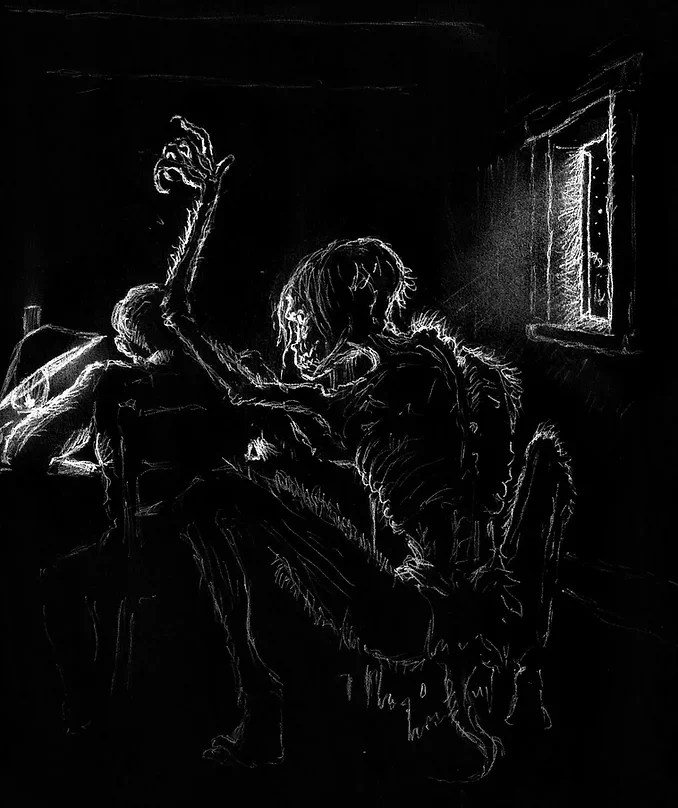
Cover Image: Illustration by M. G. Kellermeyer.
 Mete's Personal Blog
Leave a comment