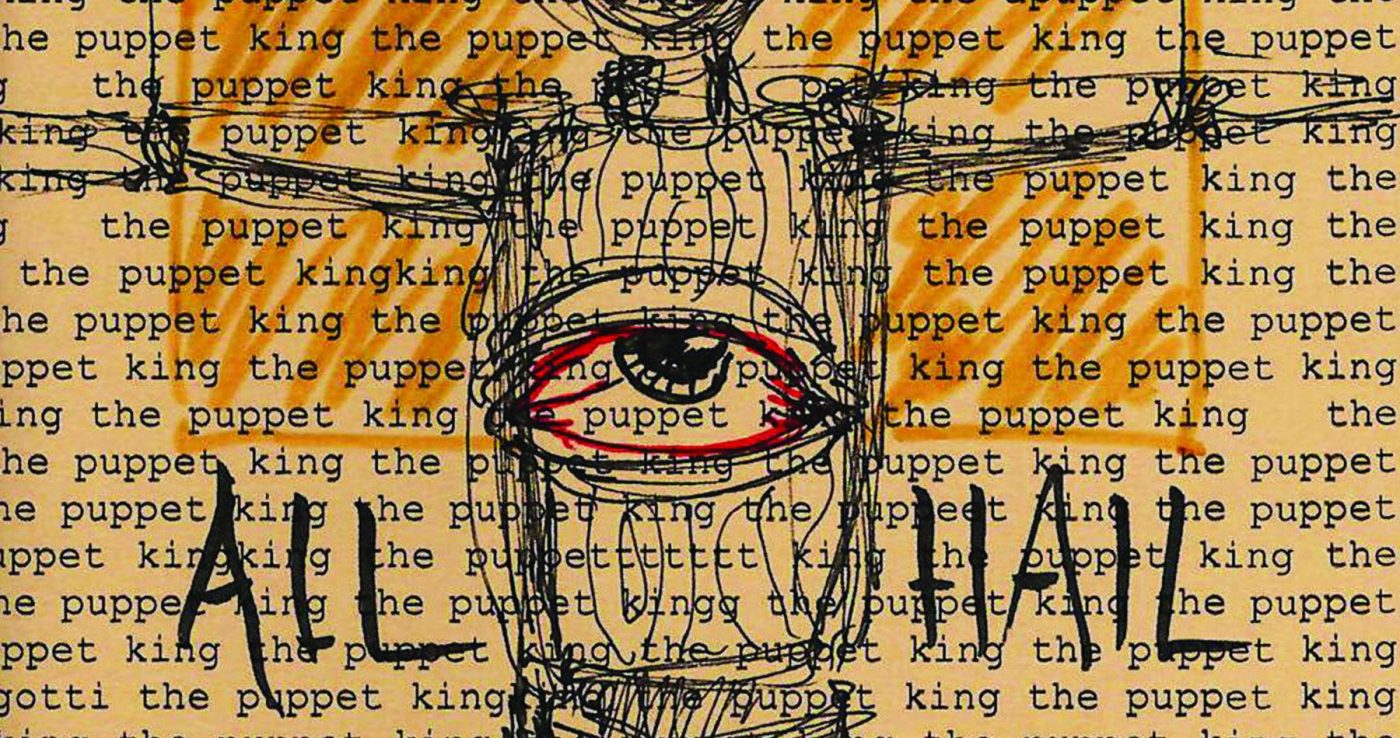
Verdict: An excellent book of existential/cosmic horror with a heavy thematic leaning into grief/loss, adding layers of originality and a fairly unique new voice to a tradition pioneered by the old masters (Poe, Blackwood, Lovecraft, Campbell, Ligotti) and their newer acolytes (Cisco, Slatsky, Hodge, Langan, Barron, Evenson, etc.). https://www.goodreads.com/book/show/61179121-the-puppet-king-and-other-atonements
First, I want to address the Ligotti comparisons: As a big fan of Thomas Ligotti’s fiction, I can definitively say that he never wrote ‘grief horror’, which is the psychological/existential unraveling precipitated by grief/loss in horror story format. In fact, that would be antithetical to his worldview where human affairs are in general “malignantly useless” in the face of a universe where everyone’s destiny is to “work the great wheel that turns in darkness, and to be broken upon it.”
Burnett, on the other hand, features grief/loss horror quite prominently in this collection and that is why I would compare his stories more closely with those of Christopher Slatsky, and particularly with Slatsky’s second collection, The Immeasurable Corpse of Nature (think of the “The Figurine” for instance). Similar to Slatsky, Burnett takes these intense, human-centered episodes of loss/anguish and weaves them into unsettling, beautiful vignettes of cosmic/existential reckoning. The second comparative name that comes to my mind is Brian Hodge, who also taps into this reservoir of grief horror to an extent, but who is more similar to Burnett for reasons of theme/subject, as I’ll get in to below.
The first story of the collection, “The Toy Shop” is a prime example of this ‘grief horror’ and one of my favorites. The story “Our Endeavors” is another good example of how Burnett takes grief/loss and weaves it into existential horror with quite pessimistic (Ligottian) tones. The final crescendo of that story (in fact, it’s last 2-3 pages in general) is really incredible, another one of my favorites from this collection.
But, nonetheless, I would say don’t acquire this collection if you expect stories like those of Ligotti (I doubt anyone will ever fill the Ligotti shaped hole in our souls). There are certain similarities with Ligotti: (1) puppets/dolls and other inanimate objects feature quite prominently in Burnett’s stories as conduits of horror, (2) he often deploys light touches of Ligottian pessimism (e.g., the desire to be an inanimate object, the horror of existing, etc.), and (3) he continues the timeless Lovecraftian (and Ligottian) tradition of using the night sky (stars, moon, space) and also light/darkness as hauntingly beautiful imagery.
Burnett also borrows some of Ligotti’s experimental narration styles, a particularly striking example being the one-sided dialogue format he uses in “The Golden Thread,” which is very clearly inspired by Ligotti’s “The Chymist.” This isn’t bad of course; I like authors borrowing stylistic things on occasion (and nothing else is similar in these two stories except their narration style).
So, while Burnett’s stories are in general in a somewhat different and more anthropic vein than Ligotti’s, there are some notable and deliberate stylistic/thematic similarities. And he also names Ligotti and analyzes several of his stories in the titular ‘monologue’ – which in my opinion was actually the weakest thing in the collection. I don’t think it was a very good analysis of Ligotti and I’d be happy to expand this if reached out to but won’t drag it here in this review.
For my second (2) point, for instance, look at this passage of Burnett’s concluding a saga of intense grief/loss horror with a touch of pessimism heavily reminiscent of Ligotti: “Know that we can’t even hope to join each other in mutual darkness, for I am there now and have found nothing.” This type of existentially bleak ending is very similar to some of Slatsky’s recent stories. For instance, consider the ending of Slatsky’s “Professor Cognoscente’s Carnival.” Both Slatsky and Burnett use Ligottian themes as parts of their stories, often as the ending punch, rather than those themes being the entire story like the big L’s style in his Teatro Grottesco collection.
But aside from grief/existential horror, Burnett also has some very Lovecraftian stories in this collection, a great example of which is “The Rubber Man.” He also leans into music and particularly metal music as a thematic setting, which is great – a bit like Brian Hodge. It is immediately possible to tell that such authors are metalheads, which is great. For me, this brought several stories quite close to my heart, those such as “Devourer” and “Sister” come to mind.
Burnett also has some quite experimental pieces, which really elevate this collection as a whole, allowing him to showcase his authorial prowess, with the titular ‘story’, “Our Endeavors,” “The Enucleator,” and also “A Prisoner’s Guide to Stargazing” coming to mind. The last one is one of the scariest things I’ve ever read, and I just want to forget about it!
Burnett also leans into Sci-Fi themes in several stories (e.g., “ABDN-1”) adding yet more thematic diversity to what is already quite a varied collection. It is similar, in that respect, to Ligotti’s Songs of a Dead Dreamer, where he too had experimented with many different literary styles and thematic strands before leaning into his ‘favorites’ in subsequent collections. This is also brings to mind Brian Hodge, who employs a similarly diverse register of thematic settings in his story collections (e.g., Skidding into Oblivion). “The Golden Thread” for instance is similar to Hodge’s “One Possible Shape of Things to Come” in the originality of its main premise – both being excellent stories that really make you think, “how did they even think of this?”
In that vein, and to humbly provide my opinion on how I hope Burnett continues his career, I feel that he is strongest when writing grief horror tuned to existential/cosmic terror such as in “Our Endeavors” and “The Toy Shop.” I hope to see more of this sort of stuff in his future work. And as I said above, I unfortunately found the largely non-fiction ‘monologue’ piece to be the weakest thing in this collection – it is always harder to land these types of works.
In general, I was excited to ‘discover’ Justin Burnett, and I can safely say that I will be following his work closely from now on. I have added him, in my mind, beside others of the new generation of promising short-form horror authors. I highly recommend this collection. Buy it, read it, spread it. I will be recommending it left and right.
***
PS: Justin, if you’re reading this, know that I enjoyed your love for the word ‘listless’, but I am curious as to how it came about that you use it in absolutely every story! 🙂 Was it deliberate?
 Mete's Personal Blog
Leave a comment